Bedgrove Spinney
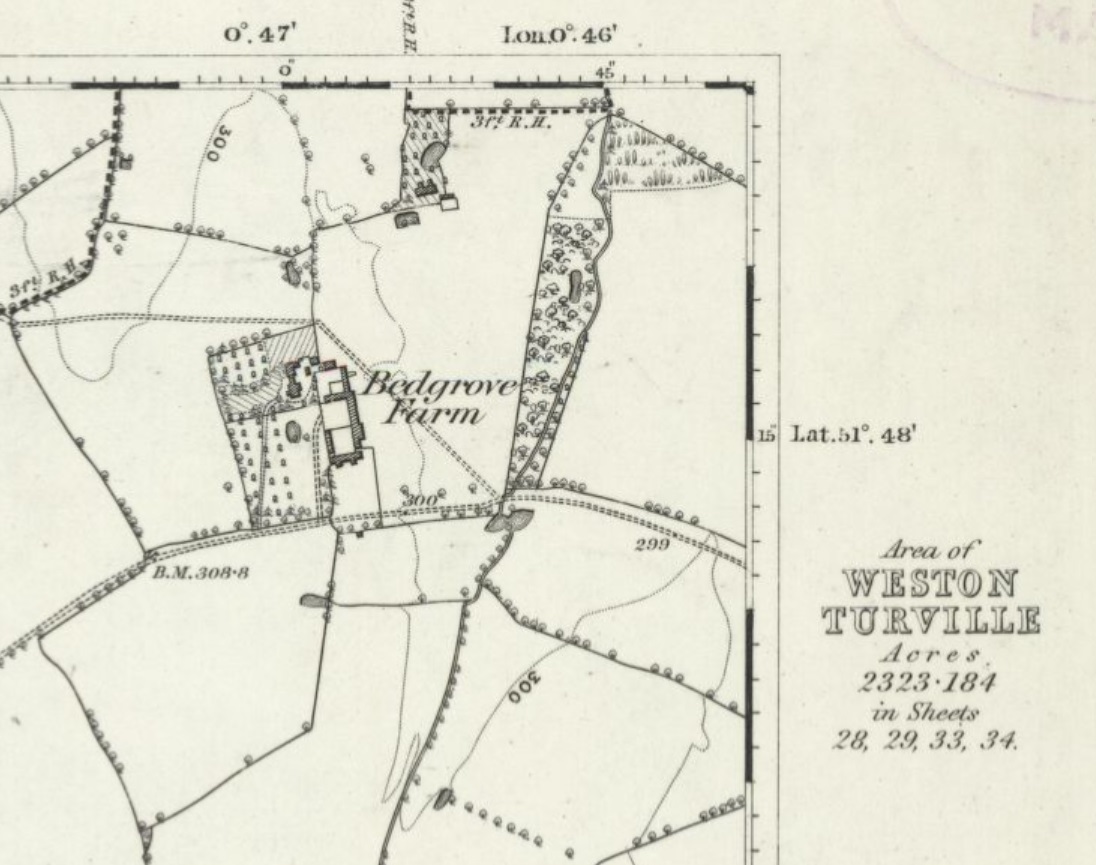
Bedgrove Spinney is a wildlife refuge in Aylesbury,
existing since the 17th century and providing timber and firewood for the
farm the housing estate built in the 1960s is named for.
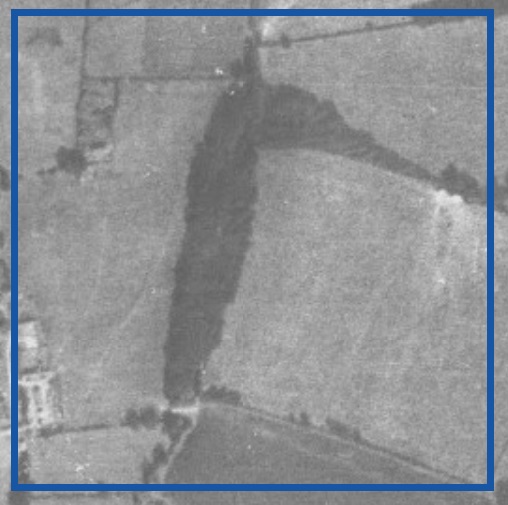
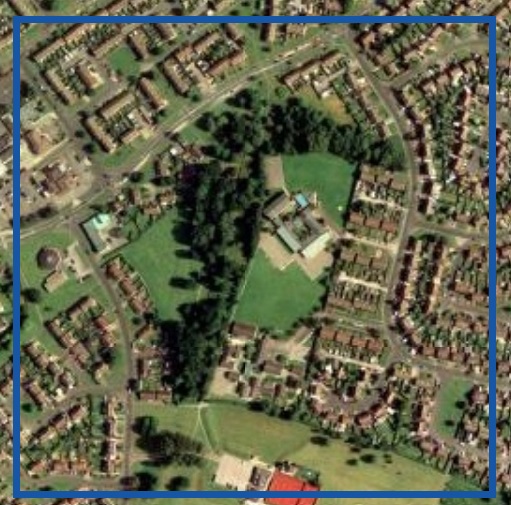
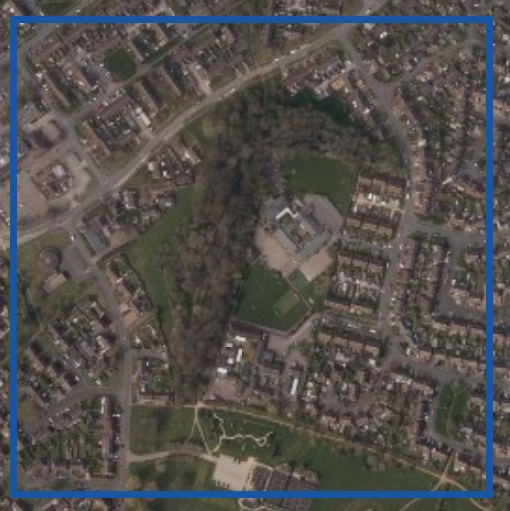
It is the only mature woodland in Aylesbury. (See map and historic photographs below)
Aylesbury has grown considerable since then, making this small woodland of
mainly oak and ash trees even more valuable and something worthy of care and protection.
Rising to the challenge a partnership between Chiltern Rangers, Bucks Council and the
Bedgrove Residents & Community Association (BRCA) started in 2025, to more actively manage
and conserve the woodland, making it better for wildlife and people.
Part of the spinney had been damaged by children constructing bike jumps.
The first step in protecting the woodland was to provide an alternative so after a
successful funding campaign raising over £100k a purpose designed new pump track was built
in the adjacent Bedgrove Park.
With this in place and attracting kids (and grown ups!) from miles around, we were good to go,
planning what work needed to be done.
Work identified, organised and executed through a series of volunteering days over
the autumn / winter of 2025:
Tree works for improved amenity and ecological values (sadly we have ash die back disease here,
but felled trees were chipped for use on site, used to delineate path edges to protect planting areas)
Improving sightlines by cutting back encroaching vegetation and low hanging limbs to
improve access for all and to make the Spinney more welcoming.
<
- Signs erected
- Bird and bat boxes
- Planting mixed species trees – over 450 – to restore damaged areas / enhance others
(trees donated from the Woodland Trust and the Rangers own tree nursery)
- Collecting seeds with Bedgrove Junior School
- Posts installed to guide mowers around new plants
- Chippings used both mulching new trees and to improve muddy paths
- Removing non native Norway maple and sycamore to provide light for native species,
including along the stream
- Creating dead hedges with the cut material to provide wildlife shelters / corridors
- Consuming lots of tea / biscuits / cake, of course!
What next?
This is just the start and a local working party has arisen from the volunteer sessions
to continue caring for the Spinney and future sessions with the Chiltern Rangers as well.
Future work could include:
Planting more native species trees and bushes to support wildlife habitat and food sources.
Mulching trees.
Management of the trees to maintain sightlines along paths / remove diseased or
non-native trees / cutting back encroaching vegetation.
Where chipping occurs use the
chippings to mulch new plants, top up the dirt paths
Litter picking
Creating dead hedges / log piles for habitat, as required
Planting appropriate species native wildflowers, eg primrose and foxgloves
Erect more bird / bat boxes / monitor existing boxes for squirrel damage and repair / replace
Maintaining posts erected to guide mowers around planting areas / with signage on
If you’d like to get involved please contact us spinney@bedgrove.org.uk
Watch out for future volunteering session with the Chiltern Rangers:
Chiltern Rangers CIC Events - Upcoming Activities and Tickets
Past events are listed here: Bedgrove Spinney by Chiltern Rangers CIC
1885
 1940's
1999
 2020
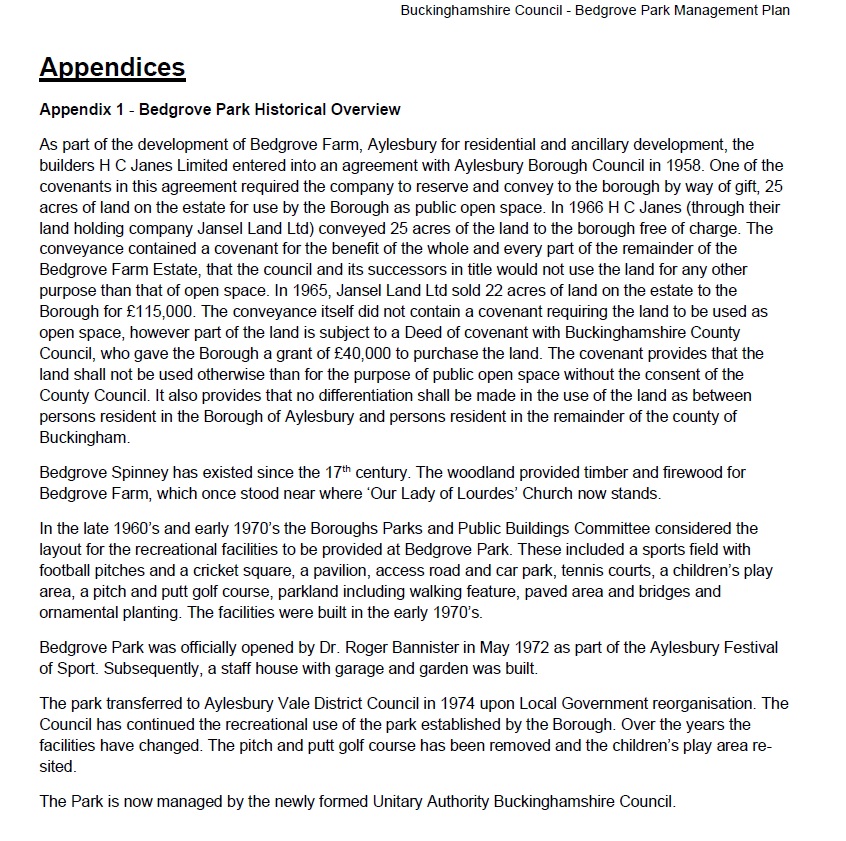
Why was it protected / not built on ?
Appendix 1 of Bedgrove Park Management Plan
Why we should protect and enhance it – ‘wildlife emergency’
The message from nature and wildlife organisations is clear.
Nature is in trouble and collectively we need to act to support and enhance
what we have to give it the best chance.
Some of the statistics concerning loss of birds, mammals and insects are shocking,
but there are things we can all do to help both in supporting the protection of habitat
within the Spinney and at home too if you feel you can :
- 1 in 4 British mammals are at risk of extinction
- British Trust for Ornithology (BTO) shows that Starling numbers have fallen
by 66% in Britain since the mid-1970s. Because of this decline in numbers,
the Starling is red listed as a bird of high conservation concern.
To help with their food supply, we can simply provide dried mealworms
and suet balls to allow them to get the nutrition they need.
- Despite work to protect Great Crested Newt they are still declining and their
habitats are deteriorating which is the biggest threat to this species going extinct.
We can help by adding a pond to our garden to welcome them in.
Do not add fish to this pond, however, as they will feed on any eggs laid by the newts.
- Hedgehog numbers have fallen by an estimated 97%, mostly due to roadkills,
but also due to restrictions on foraging due to boundary fences around our gardens.
We can help them by having a small log pile in a quiet corner of our garden and
installing ‘hedgehog gates’ – gaps the size of a music CD in fences – to enable them
to forage from garden to garden.
Even consider installing a hedgehog house for them to hibernate in – they are great garden
companions eating slugs which might otherwise eat your flowers.
The Wildlife Trust have said "If we don't tackle the threats facing our woods
and trees, we will severely damage the UK's ability to address the climate and nature crises."
Reference to David Attenborough’s latest series ‘Wild Isles’ explains
about the decline
in British wildlife and what can be done to turn the tide.
There is a message of hope if we act now. Every square inch of habitat is worth fighting for.
There is already evidence that conservation and rewilding efforts across Britain and Europe
are having positive results on biodiversity.
Bedgrove is typical of many housing estates, where over the years front gardens have been paved
over for off road car parking, which helps keep roads clearer but doesn’t help wildlife.
Even leaving a square metre of soil for plants and flowers to grow is better than nothing,
or having pots with plants in. Wildlife benefits from ‘stepping stones’ to travel between
suitable habitats so everyone can do something towards this goal.
Where Bedgrove is unusual is in having our Spinney. No other part of Aylesbury has such
a wildlife refuge which makes it all the more important to protect it, not least as further
urbanisation on the fringes of Bedgrove is coming with Hampden Fields.
The trees, the understorey bushes, the undergrowth grasses, brambles and cow parsley
and the stream running through all contribute to providing incredible habitat for our
local wildlife.
Why not join the local Wildlife Trust to find out ways we can all help wildlife out in our
gardens and beyond:
Berks, Bucks & Oxon Wildlife Trust (bbowt.org.uk)
Find us on:


| BRCA Disclaimer © 2020 - 2026 - Bedgrove Residents & Community Association
 Bedgrove Residents & Community Association